


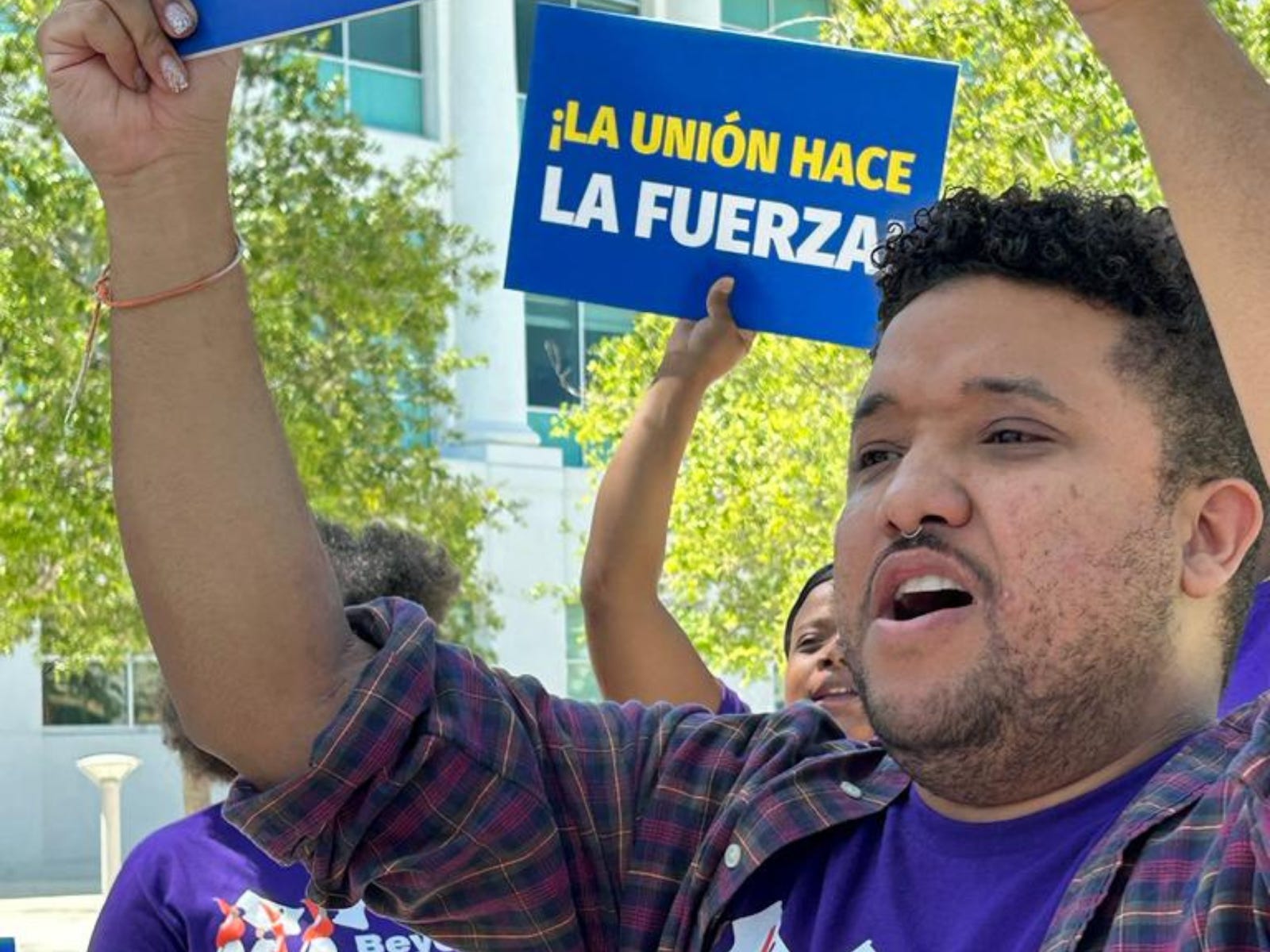
A few months ago, we released The Temp Trap: A Blueprint for Organizing Workers with Records in the Temp Industry, our groundbreaking report on the relationship between the carceral system and temp agencies.
In the last two issues of The Work Release, we unpacked how punishment continues after prison and how temp agencies profit from instability. This month, we turn to Part III: Florida’s regulatory landscape, and why the fight for job quality can’t depend on policy change alone.
Florida’s Legislative Landscape
Adapted from PART III of The Temp Trap by Maya Ragsdale and Katherine Passley
Florida is home to one of the largest temp labor markets in the country and one of the most hostile states for workers trying to assert basic rights. Weak enforcement, sweeping preemption laws, and employer-friendly labor policies create an environment where exploitation is rampant.
For temp workers, especially those with records, this structure creates a pipeline into low-wage work where retaliation is easy and instability is built into the job. And, levers to policy change are often blocked. Even when laws protecting working people exist, they are frequently not enforced.
Below, we break down the key legal barriers that make it so difficult for workers to win power through legislative change in Florida, as well as what we can do to build worker power that can compel change directly from the corporations that profit from precarity.
Florida’s Labor Pool Act and Its Limits
At the center of Florida’s regulatory framework for our base is the Florida Labor Pool Act (FLPA), a 1995 law providing rare, industry-specific protections for blue-collar temp workers who find work through labor pools. The Act assures minimum wage and pay transparency, caps predatory fees, and guarantees workers the right to accept permanent employment with host employers, and other basic workplace protections.
The FLPA remains an essential safeguard, but it falls far short of ensuring dignity or safety for most blue-collar temp workers. It relies exclusively on private enforcement, with no dedicated state oversight, and achieving robust reforms - like those enacted in 2023 under Illinois and New Jersey’s Temp Worker Bill of Rights - remains politically difficult in Florida’s current climate. Compounding this, the state’s sweeping preemption policies prevent local governments from adopting stronger standards.
That’s why Beyond the Bars is pursuing targeted amendments this session with Sen. Ileana Garcia and Rep. Chambliss, in coalition with the South Florida AFL-CIO, filed as HB 1287 / SB 1112. If passed, the amendments would: (1) ban placement fees when host employers directly hire temp workers, (2) require annual registration of labor pools with the Florida Department of Commerce, and (3) strengthen enforcement by mandating attorney fees and costs for prevailing parties.
We’re advocating to strengthen the FLPA because we believe in raising the floor. But the broader lesson is clear: in a state where reform levers are routinely blocked and enforcement is weak, worker power can’t depend on legislation alone.
Public policy is the floor, not the ceiling. It takes organizing strong enough to change what employers can get away with, whether or not the state chooses to act.
The State Blocks Local Power Through Preemption
State-level preemption, a legislative power exercised by a state government to prevent or override laws passed by its own lower-level governments, like counties and cities, has become a defining feature of Florida’s state legislature. In the past five years, state legislatures have used preemption to block dozens of local efforts to strengthen worker and tenant protections locally.
Take, for example, WeCount!’s Que Calor campaign to protect outdoor workers in Miami-Dade County from excessive heat. Research estimates that over 70 percent of heat-related deaths coincide with a worker’s first week on the job. In 2024, Florida Governor Ron DeSantis signed legislation that prevented local governments from passing their own heat protection standards. This effectively blocked efforts in Miami-Dade County, which had been preparing to pass the nation’s first municipal heat standard, including heat safety education, mandatory water breaks, and shade provisions for 100,000 agriculture and construction workers.
Florida also prohibits local governments from mandating fair scheduling, requiring paid sick or family leave, or setting stronger labor standards for public contracts. These restrictions make it nearly impossible for counties and cities to establish fairer standards for temp agency workers, even when employers and local officials agree protections are needed.
By concentrating power at the state level and stripping it from local governments, labor standards become increasingly disconnected from local need, leaving workers with records trapped in a race to the bottom.
Who’s Enforcing Employment Laws? (Almost Nobody)
Nothing illustrates Florida’s weak worker protection infrastructure more clearly than the persistence of wage theft. Florida has one of the nation’s highest rates of wage theft, disproportionately affecting low-wage workers. Workers in the state are much more likely to be paid less than minimum wage, and industries such as construction and warehousing, which rely heavily on temp labor, are among those most affected.
Since 2003, the Department of Labor has recorded approximately 8,300 wage theft violations affecting 6,239 workers in Florida’s temp industry. Many of these cases involved hundreds of incidents per investigation. Altogether, these cases resulted in just over $4.1 million in recovered wages and just over $312,000 in civil penalties.
That comes to an average of fewer than 300 Florida workers per year who have been able to recover some wages through the federal wage and hour process.
Despite the scale of the problem, Florida’s capacity to enforce labor laws is woefully inadequate. The state has no Department of Labor. The Attorney General, its only office authorized to enforce the minimum wage, rarely acts. Workers can file complaints with the U.S. DOL, but relying on the federal agency alone leaves enormous gaps. The DOL’s resources are stretched across 50 states and millions of workplaces, making proactive, industry-wide investigations nearly impossible even under labor-friendly federal administrations.
State Supervision as Control
For many workers with records, Florida’s supervision system is one of the main forces shaping the labor market. Probation and other forms of state supervision require people to work, but impose rigid rules that make stable employment harder – for example, mandatory check-ins during business hours, travel restrictions, fees, and constant monitoring.
This creates a situation where workers’ legal rights exist on paper but are difficult to exercise in practice. In a temp agency job, for example, where assignments can end without explanation, speaking up about wage theft, unsafe conditions, or harassment can mean more than losing income. It can trigger a cascade: missed payments, missed appointments, a technical violation, and reincarceration.
In this way, supervision functions as an invisible tool of workplace discipline, expanding employer control and making retaliation even easier, especially in temp work where job stability is already built to be temporary. As one worker told sociologist Gretchen Purser, temp work can feel like “still doin’ time.”
Why We Organize Beyond Legislative Reform
Taken together, these overlapping systems reveal how Florida’s regulatory architecture privileges employer flexibility over worker security. They explain why even major advocacy victories, like the defense and expansion of the FLPA, are insufficient on their own to transform the industry.
Understanding Florida’s regulatory landscape helps clarify the real terrain: reform is necessary, but it is not sufficient. If we’re serious about economic freedom and decarceration, we have to build worker power that can compel change, not just request it. That means organizing directly at the point of profit: the temp agencies and the corporations that use them, to win standards that law doesn’t guarantee and enforcement won’t deliver.
As we build power with temp workers across Florida, we’re uplifting one member each month whose leadership embodies why this work matters.
Member Shoutout
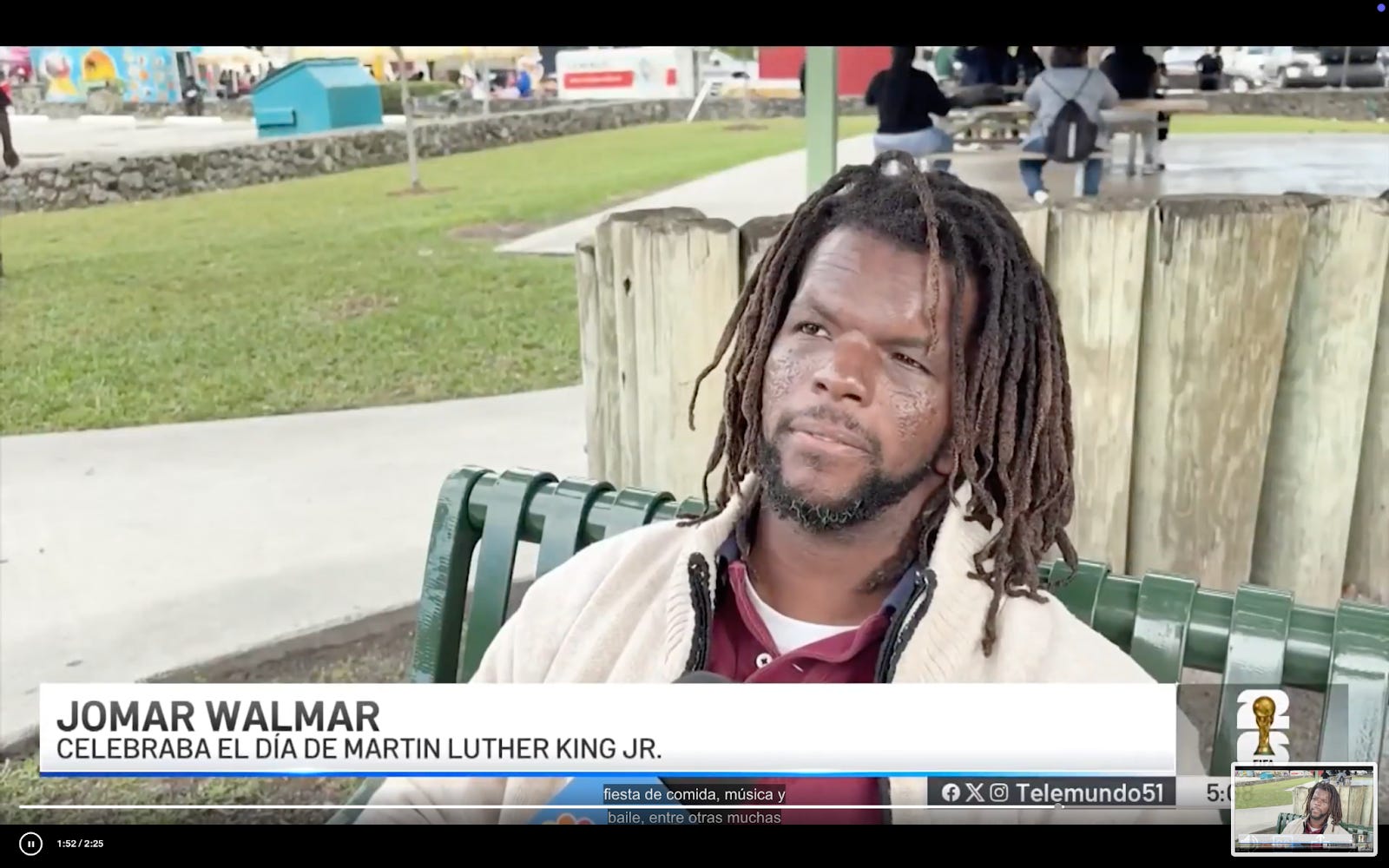
Jamark spoke with NBC 6 South Florida during their MLK Day highlight. Note: His name is misspelled in the segment.
This month, we’re celebrating Jamark, who recently took up a new leadership role with Beyond the Bars as part of our union team, serving as a union contract liaison and helping strengthen the pipeline into union jobs for workers with records.
During the MLK Day Parade, Jamark was featured on NBC 6 South Florida, speaking about the connection between the labor movement and Dr. King’s legacy.
Jamark is also a proud AFSCME Local 199 member and county maintenance worker, supporting Miami-Dade’s Parks & Rec Department and other county offices, doing the essential clean-up and upkeep work that keeps our county running.
Here’s what we’ve been moving since the last Work Release.
Since the Last Work Release
Worker Organizing
We launched new organizing teams to create a stronger structure for developing our members’ leadership. We formed turf-based teams focused on select temp agencies that primarily place workers with records, training worker-leaders to organize strategically where we already have density, relationships, and power. Alongside the turf teams, we launched a Public Policy Team to drive our legislative priorities, a Political Education Team to strengthen analysis across the organization, and Coordination Teams to support communication and member engagement.
Worker Advocacy
Our amendments to Florida’s Labor Pool Act (FLPA) were filed in the Florida Legislature as sister bills: SB 1112, sponsored by Sen. Ileana Garcia (R), and HB 1287, sponsored by Rep. Chambliss (D). Both bills have been assigned to committees in their respective chambers. We also began co-teaching LAW868: Seminar and Practicum with Prof. Donna Coker at the University of Miami School of Law, helping build the research infrastructure for an upcoming campaign to eliminate probation supervision requirements that undermine people’s ability to maintain stable employment while under supervision.
Worker Support
We provided urgent crisis response and stabilizing support to 17 members navigating reentry. This included direct assistance and referrals, including support with furlough requests so an incarcerated person could attend a funeral; eviction prevention and relocation support for members experiencing housing insecurity; referrals to job development training; assistance applying for public benefits; food pantry and essential needs referrals; and notary services. We also supported members through two restorative circles to help prevent conflict from escalating.
Cross-Movement Solidarity
We presented alongside FWD.us at the AFL-CIO’s MLK Conference on a panel titled “The Price We All Pay: The Impact of Mass Incarceration on Working Families and Labor Organizing,” featuring powerful reflections from member-leader Cece. With Jobs with Justice, we advanced FIFA-related advocacy to secure access rights to the temp workers contracted for FIFA events and expand workshops to temp workers, while pushing for civil citations and public health approaches instead of arrests. Finally, we showed up for MLK Day with a full day of action, starting with a Day of Service at the Freedom Lab and continuing through the MLK Parade.
Organizational Development
Our team held a staff retreat and planning sessions to align on priorities, strengthen internal systems, and prepare for 2026. We also launched our new website to help more workers find us, more partners connect with us, and more people understand what it looks like to build worker power at the intersection of labor and decarceration. Check it out, explore the updates, and share it with a friend.
Here are select features of our work in the media since our last post.
Beyond the Bars In The Media
The Real News Network, Parole, punishment, profit: Temp industry traps returning citizens by Mansa Musa (Jan. 19, 2026)
Mansa Musa speaks with Katherine Passley and Maya Ragsdale about how Florida’s temp industry traps the most vulnerable workers and operates as a profitable and punishing extension of the prison system.
Labor Notes, From Temp Trap to Union Jobs: Building Pathways for Workers with Criminal Records by Maya Ragsdale (Dec. 17, 2025)
Maya’s op-ed argues that mass incarceration and the explosive growth of the blue-collar temp industry have together created a “temp trap” that funnels people with criminal records into low-paid, dangerous, precarious work. It lays out an organizing strategy for unions and worker groups to break that trap by targeting host employers to win multi-employer standards, while building direct pathways into stable union jobs.
The Guardian, Florida workers with criminal records trapped by temp agencies, report finds by Michael Sainato (Nov. 18, 2025)
Read Michael’s exclusive coverage of our Temp Trap report. He writes, “Beyond the Bars is calling for changes to probation requirements; more stringent standards and regulations of temp agencies and host employers; improved protections and organizing rights for workers at temp agencies; expansion of training programs, apprenticeships, and union jobs; and a crackdown on abuse of subsidies of these temp systems.”
As we move into February, here’s what’s coming up.
Coming Up
General Body Meeting
Feb 8, 2026 | 3:00–5:00 PM
Members-only meeting to come together, share updates, and move our work forward.
Members, contact your organizer for details.
South Florida Worker’s Assembly
Feb 22, 2026 | 2:00–4:00 PM
Workers across Florida are building a Worker’s Assembly to connect workers across the state. We are co-leading the effort. Join the Miami Chapter at our office!
Members, contact your organizer for details. Non-members, please email katherine@beyondthebars.org to join.
Collective Centering
Every Wednesday | 12:30–1:30 PM
Join Mass Liberation’s weekly space to ground, reflect, and practice collective care.
Join Zoom Meeting: https://us02web.zoom.us/j/81435201797
What We’re Reading
Jacobin, “Working-Class Social and Economic Attitudes: An Analysis” by Jared Abbott, Dustin Guastella, Carson Kindred, and Sean Mason
A new report from Jacobin and the Center for Working-Class Politics shows that working-class voters are far more open to progressive politics than Democrats assume. They’ve grown more socially liberal over time and remain strongly pro-worker on economics, especially on wages, job security, and protecting universal programs like Social Security and Medicare.
In These Times, “We Are Facing a Tsunami of Hate”: Amid ICE Crackdown, Unions and Community Groups Call for Minnesota Shutdown in 10 Days by Amie Stager and Sarah Lazare
Following the ICE murder of Renee Good and an assault on the state by federal immigration forces, a labor-community coalition is calling for residents to refuse to work, shop or go to school on January 23.
Here are ways to take action with us.
Take Action
Share the Report → bit.ly/TheTempTrap
Stay Updated → @beyondbars_mia
Learn More → beyondthebars.org
Take Action → Sign up to volunteer
Fuel the Work → Donate now