

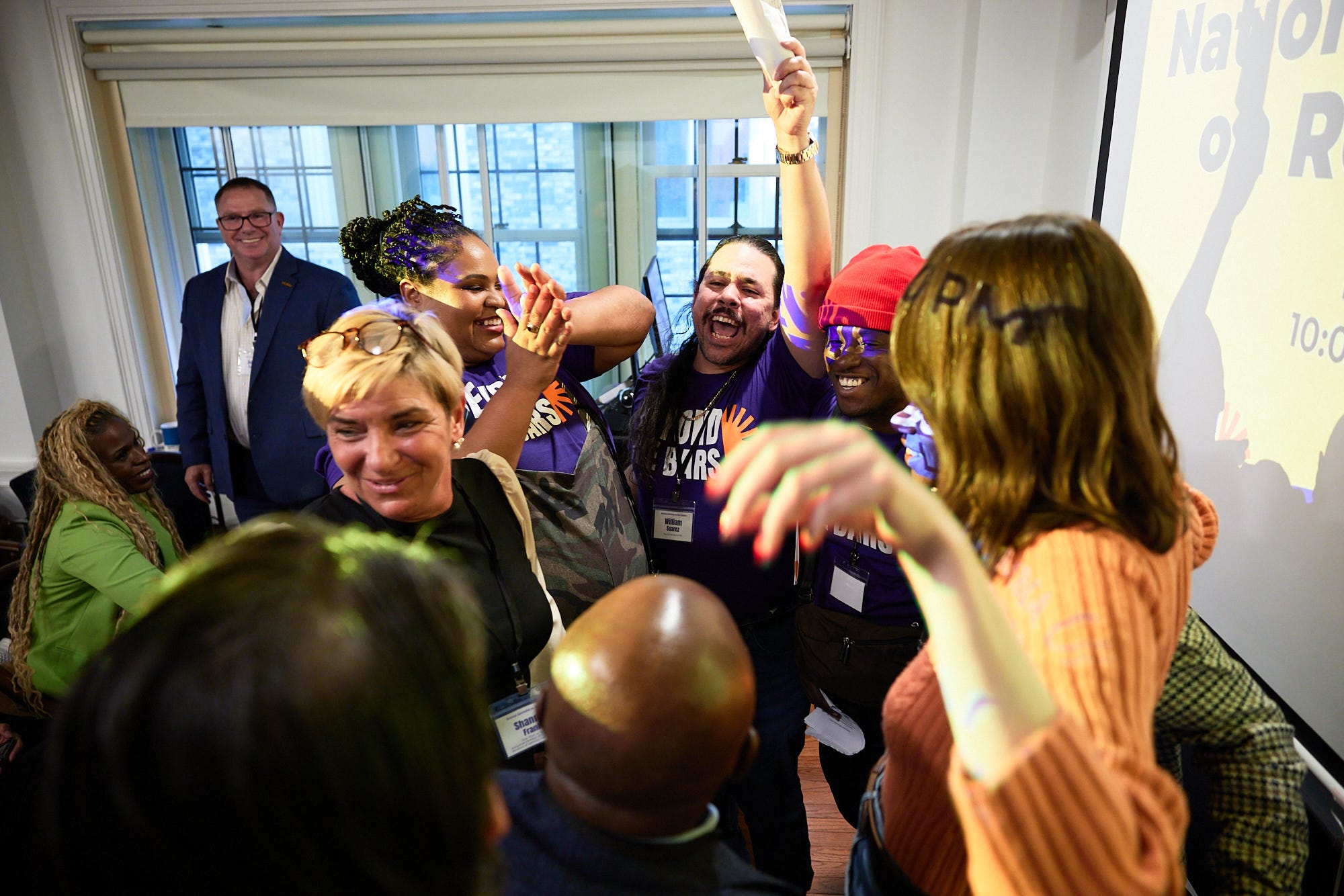
Leaders from Beyond the Bars (BTB), Jobs to Move America (JMA), and United Southern Service Workers (USSW) before their panel on New Organizing at the National Convening on Real Reentry, April 3, 2026.
Every conviction has an aftermath. This month, we share insights from the National Convening on Real Reentry, hosted by Beyond the Bars and Columbia Labor Lab, where labor and decarceral leaders gathered in New York City to build a coordinated strategy for Real Reentry and a long-term labor agenda to engage the 114 million people in this country with a criminal record.
We begin with our own member organizer, Chris Jackson, who has been on the front lines of the fight for quality jobs in South Florida.
Organizer Spotlight: Chris Jackson

Chris Jackson has been working in the temp industry for nearly 30 years. Born and raised in Miami, FL, he was recruited into Beyond the Bars by a member who lived in his neighborhood during the organization’s early years. Chris’s vast experience working at construction sites via temp agencies has provided crucial strategic insights for our organizing campaigns, while his outgoing nature has helped recruit countless fellow workers (he really does seem to know everyone). He is currently a member lead for the Turf and Solidarity teams and helps manage the court support calendar. Chris recently celebrated his 50th birthday with the Beyond the Bars family and we couldn’t be happier to be in the movement with him.
Chris shared what drives him to organize. The following essay situates that work in a national context, exploring how the worker organizations that gathered at the National Convening on Real Reentry are building power for workers with records across industries.
National Convening on Real Reentry
Across the country, we are seeing the rise of authoritarianism alongside the consolidation of corporate power. These forces are not new. They are rooted in a long history of racial capitalism, from slavery and settler colonialism to the modern carceral state. Today, they shape the labor market by criminalizing entire communities and funneling them into the lowest-wage, least protected sectors of the economy.
On April 3, 2026, Beyond the Bars, in partnership with the Columbia Labor Lab, hosted the first-ever National Convening on Real Reentry, to identify and share concrete models to expand quality jobs and strengthen worker power.
The convening was organized around a single question:
What will it take to build a labor movement serious about ending mass incarceration, and a decarceral movement serious about job quality and worker power?
Underlying every panel was a deeper reframe. Reentry is not just a social service issue—it is a labor issue. The exclusion of workers with records from stable, union jobs and their concentration in precarious work weakens standards across industries and limits the power of the broader working class.
For decarceral organizers and reentry advocates, the task is to treat labor as a core site of change, organizing alongside workers to build power, not just access.
For labor organizers, the task is to bring workers with records into the center of strategy, raising standards and expanding union pathways.
Below is a summary of each panel and the commitments that emerged.
Panel 1: Reentry as a Core Labor Issue
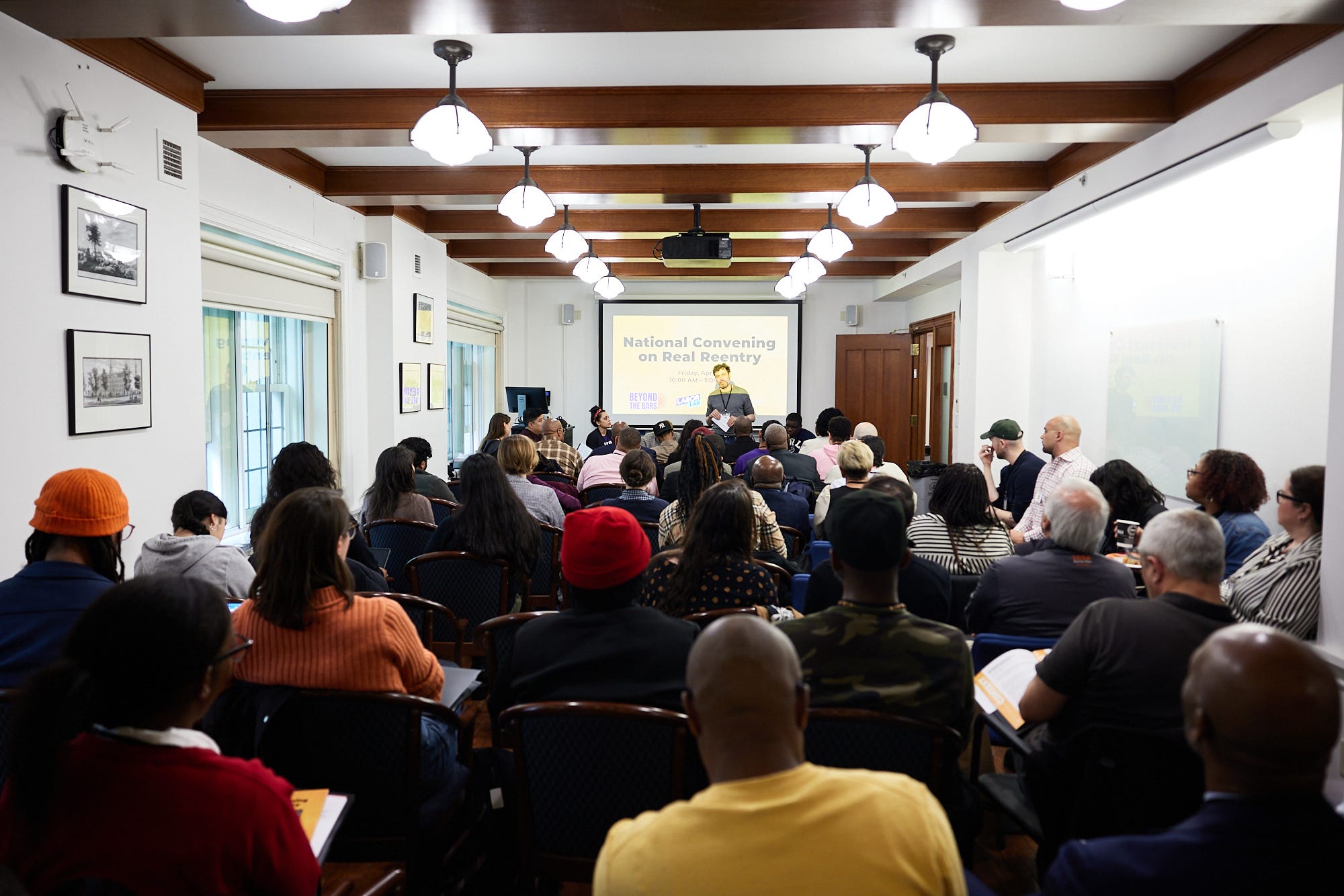
Facilitator: Alex Han (May Day Strong) | Panelists: Adam Reich (Columbia Labor Lab), Maya Ragsdale (Beyond the Bars), Justice Favor (Mason Tenders’ District Council)
The charge: Measure reentry outcomes by job quality and worker power, rather than by training and placements.
Incarceration creates a system of exploitation, not just exclusion. Billy Pearson (USSW) described earning pennies while incarcerated, then just $2/hour after release. Maya Ragsdale (Beyond the Bars) traced how workers with records are funneled into the temp industry, where wages are so low they pull down standards across the labor market, as Adam Reich’s research demonstrates.
Traditional reentry metrics miss this entirely. They count placements, not whether those jobs are safe, stable, or dignified. That has to change. Success should be measured by job quality—wages, conditions, and the power to defend both—not just whether someone is placed somewhere. But raising the bar on measurement also requires raising the floor on what jobs are actually available to workers with records.
No single union can absorb the full scale of exploitation. But if more unions are in the fight, and if community-based organizations use their leverage to push work toward high-road employers, we can start to shift the terrain. That means directing development toward unionized jobs with real standards, not lowest-bidder “local hire” schemes with no wage standards. It means fighting for stronger Project Labor Agreements, expanding the share of work covered by union contracts, and building cross-sector partnerships that match the scale of the problem.
Those partnerships have to run both ways. Labor brings what decarceral organizations don’t: wages, benefits, and enforceable contracts. Decarceral organizations bring what labor lacks: wraparound support—somatics, housing, mediation, mental health—that allows workers not just to access jobs, but to stay and grow in them.
Neither can scale this work alone, but together, we can.
Panel 2: Apprenticeship Pathways into Union Jobs
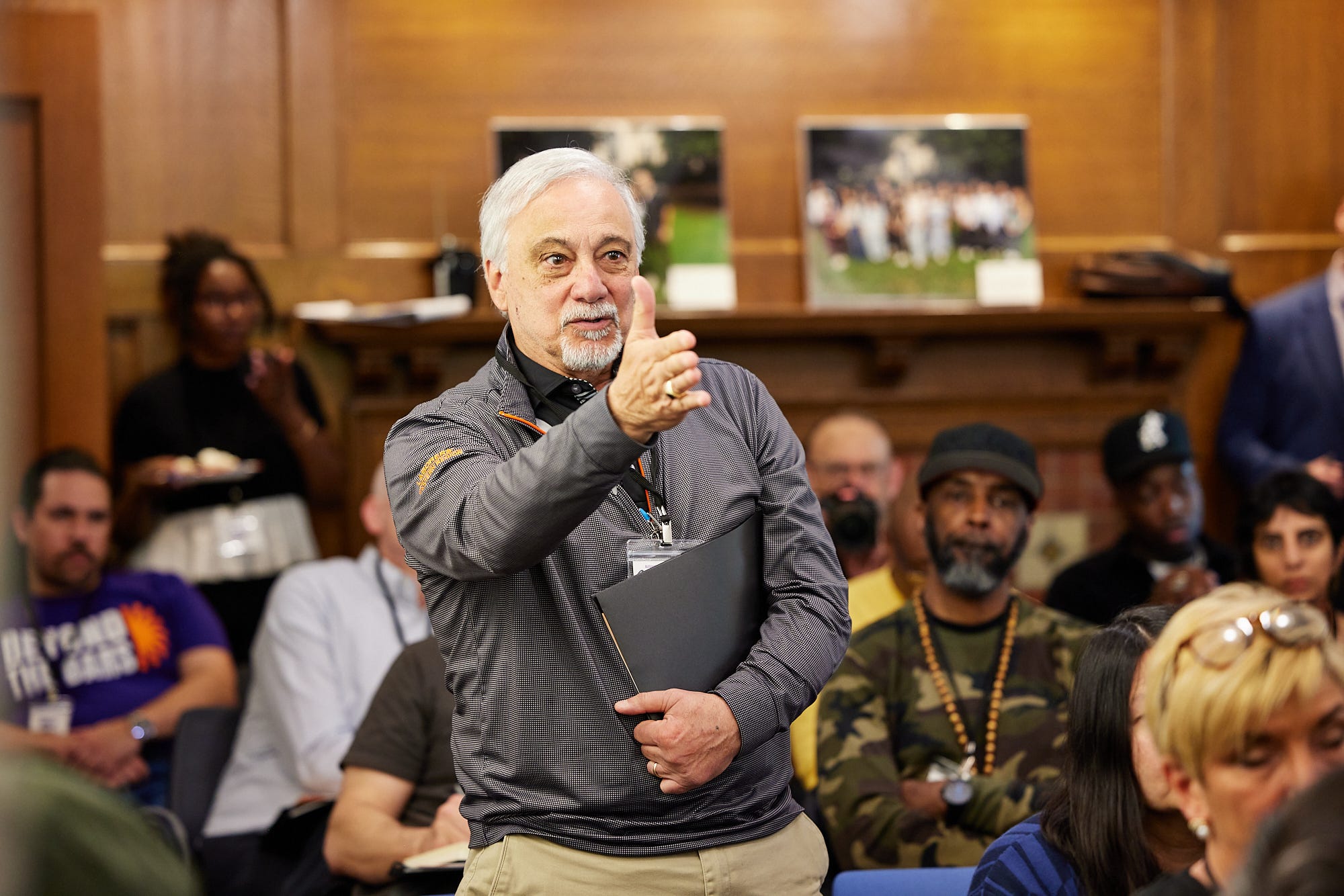
Facilitator: Adam Reich (Columbia Labor Lab) | Panelists: Gyasi Headen (Pathways to Apprenticeship), Wayne Richardson (NJ LECET), Michelle Fussell (Iron Workers International)
The charge: Build pipelines into union careers and the project pipeline to sustain them.
Union apprenticeships are one of the clearest pathways into stable, middle-class careers. Standalone certifications and skills training programs, on their own, rarely are. The difference isn’t just training; it’s connection to a union pipeline. The strongest pre-apprenticeship programs prepare workers to enter, stay in, and strengthen their union.
Pathways to Apprenticeship (P2A), developed out of LIUNA Local 79, is a leading example. Their five-week pre-apprenticeship for workers with records integrates trade preparation with union culture, labor history, and political education. Participants rank the industries they’re most interested in, and the program is grounded in a clear understanding of what union membership offers: higher wages, collective power, and a legacy rooted in civil rights struggle.
That model is now expanding into New Jersey through the New Jersey Laborers-Employers Cooperation and Education Trust (NJ LECET), where Wayne Richardson is building a statewide pipeline for workers with records, connecting training directly to real union opportunities. The program combines OSHA 30 certification with deep exposure to labor history, union expectations, and the realities of life across the trades.
The Iron Workers are advancing a parallel approach. They are pushing this model upstream, bringing registered apprenticeship programs directly into prisons, with active programs now in 13 states and continuing to grow.
Across both models, there is a shared orientation: workers are not treated as future employees alone, but as future union members and potential organizers.
These programs work. And they should be scaled. But scaling training alone is not enough. As Michelle Fussell (Iron Workers) put it:
We don’t have a skilled workforce problem. We have a pipeline problem.
Communities across the country need energy systems, bridges, housing, and infrastructure. The demand for skilled labor is real. But without long-term project planning and job certainty, training pipelines have nowhere to send their graduates. Workers can complete pre-apprenticeships and still end up back in unstable, low-wage work if the jobs aren’t there.
If apprenticeships are going to deliver on their promise, decarceral organizations have to fight alongside unions not just for training pipelines, but for project pipelines—public and private investments that guarantee a steady flow of union jobs. That means long-term infrastructure commitments, stronger Project Labor Agreements, and intentional alignment between workforce development and economic development.
Panel 3: Union Worker Co-ops and Shared Ownership
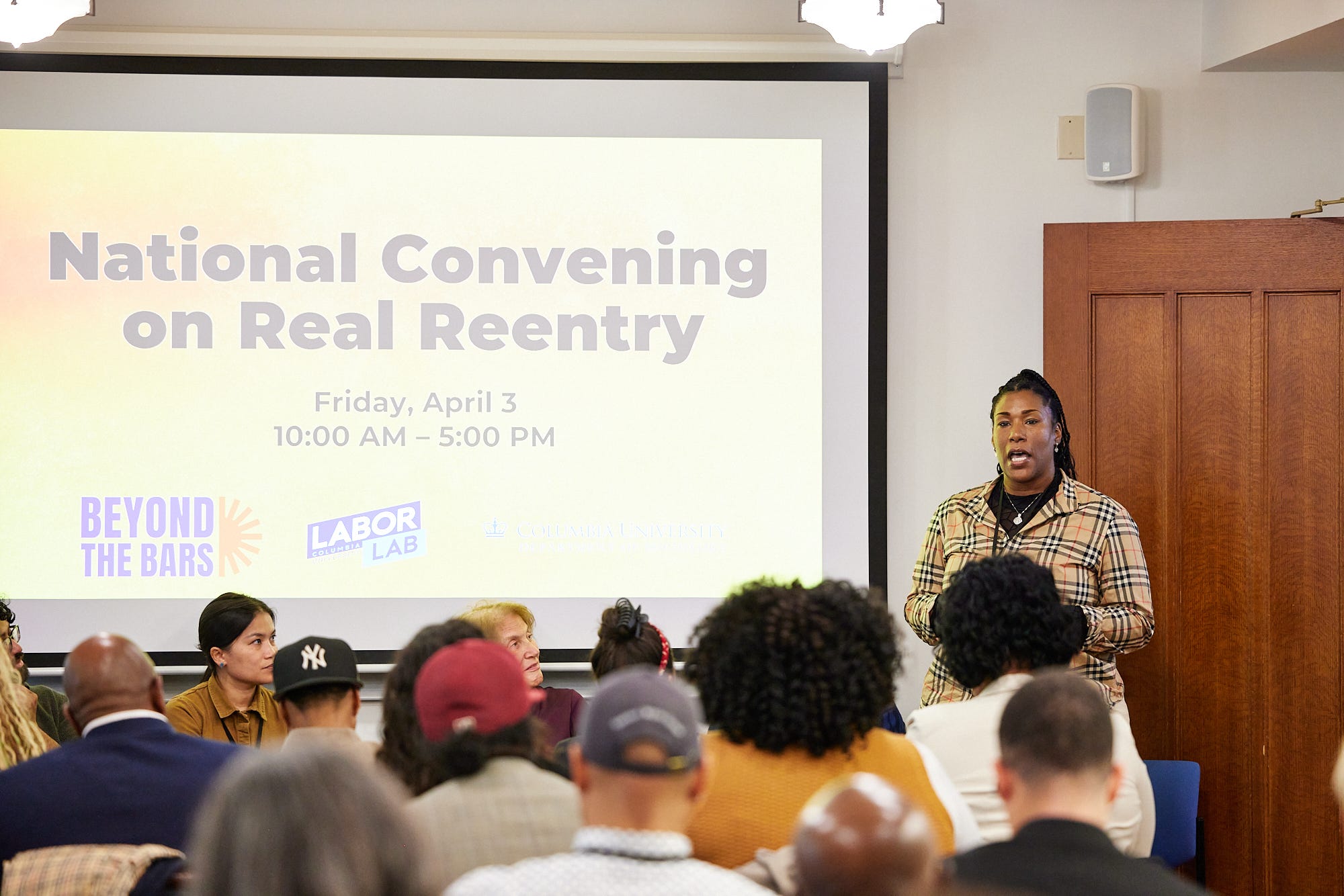
Facilitator: Govind Srivastav (Beyond the Bars) | Panelists: Deborah Olson (Co-op Rhody), Kim Britt (ChiFresh Kitchen), Camille Kerr (VOLTS), Andre Dev (Community Cannabis Network of Rhode Island), Anh-Thu Nguyen (DAWI)
The charge: Convert businesses and build new worker-owned co-ops where workers with records are both owners and union members.
A cooperative is a form of employee ownership built on two core principles: workers own the business and share in its financial success, and the workplace is democratic—one worker, one vote. ChiFresh Kitchen, a co-op started by six formerly incarcerated women in Chicago, shows what that looks like in practice. As Kim Britt (ChiFresh Kitchen) described it, being part of a cooperative means using collective power to run the business together: when worker-owners review the budget, every person shapes how revenue is used.
For workers with records, that structural shift matters. The co-op model bypasses the background-check gatekeeping that screens formerly incarcerated workers out of jobs. It replaces “will you hire me?” with “we own this,” converts wages into equity in communities long excluded from wealth-building, and puts workers in the role of decision-maker rather than supplicant—the opposite of how the carceral system has positioned them.
Co-op Rhody shows how grassroots organizing can build union-supported cooperatives in new industries. And this fusion of co-ops and unions isn’t new. From the Knights of Labor in the 1890s to more recent efforts by USW, UFCW, and SEIU, worker co-ops have long been part of labor’s strategy to build power.
The opportunity to expand that model is urgent. The country is in the middle of a “Silver Tsunami,” as baby boomers retire and small and mid-sized businesses are sold or shut down at scale. Many of these businesses, union or not, could be sold to the workers who run them and converted into co-ops. The alternative is the same cycle that has hollowed out work for decades. As Deborah Olson (Co-op Rhody) put it:
Our pensions are invested into private equity. Private equity buys out the businesses. Private equity puts us out of a job.
Worker-owned cooperatives offer an exit from that cycle. When workers own the business, it can’t be sold out from under them or stripped for parts. Building a union-cooperative pipeline now is one of the most concrete ways to intervene. And building it intentionally, with formerly incarcerated workers as owners, helps upend the carceral economy at the same time.
Panel 4: Legislation, Public Dollars, & Strategic Enforcement
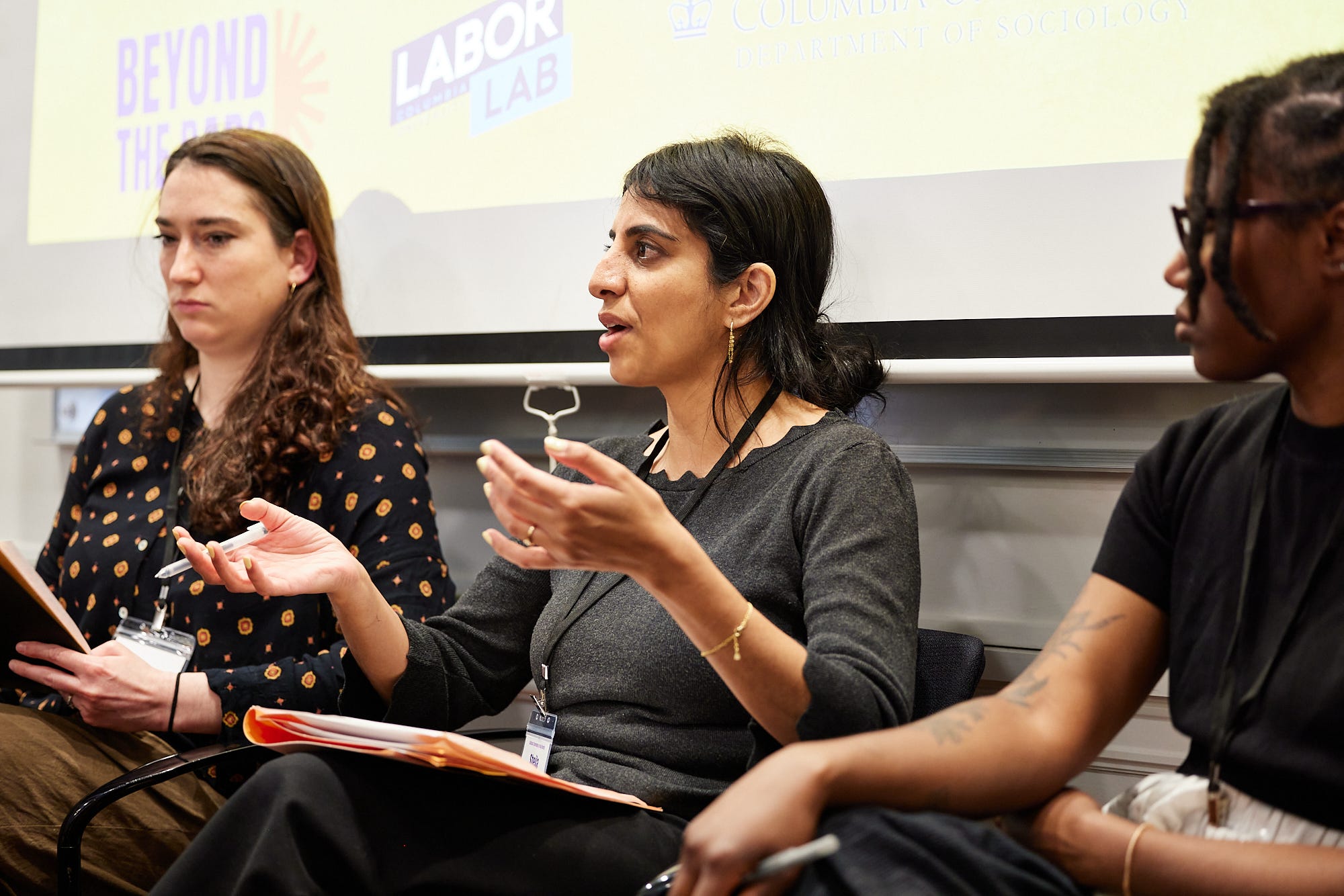
Facilitator: William Suarez (Beyond the Bars) | Panelists: Karla Mayenbeer Cruz (GNY LECET), Becky Simonson (1199 SEIU New England), Sheila Maddali (GLOW), Brittany Alston (Philly Black Worker Project), Maya Ragsdale (Beyond the Bars)
The charge: Tie worker protections to every public dollar and build the enforcement infrastructure that turns legislation into reality on the ground. Legislation without compliance is theater.
For workers with records, the temp industry is the floor of the labor market. It’s unsafe, unstable, and often pays far below minimum wage. As Maya Ragsdale (Beyond the Bars) said,
One Beyond the Bars member took home $50 after ten hours of work after all the deductions were taken out of her paycheck for safety equipment, transportation, and more.
That kind of arithmetic becomes routine when an industry is built to absorb the most desperate workers and let standards collapse around them.
Coalitions are pushing back. Temp Worker Bill of Rights have been adopted in Illinois and New Jersey, setting a wage and safety floor for an industry that has long operated without one. In Philadelphia, the Philly Black Worker Project’s All Due Respect campaign is pushing further through the Dues Act, which would designate formerly incarcerated workers as a protected class, raise the wage floor in the city’s low-wage industries, and create union employment pathways for temp workers, addressing job quality at the front end of release rather than after the fact.
In Florida, Beyond the Bars has been working to defend and expand Florida’s Labor Pool Act, the 1995 law that provides industry-specific protections for blue-collar temp workers. After defeating an attempted repeal, the organization is pushing for stronger protections: eliminating conversion fees, which run $10,000 to $30,000 when a host employer tries to hire a temp worker directly, and requiring agencies to register with the Florida Department of Commerce to stop the “fly-by-night” practice of closing under one name and reopening under another to evade accountability.
Another level is public money. Construction projects rely on heavy public subsidies, and affordable housing in particular cannot be built without them. Every one of those subsidies is a chance to attach wage and benefit standards to the work, and every one without those standards is a missed opportunity to raise the floor.
The same principle drives the work Becky Simonson is doing at 1199 SEIU New England are doing through the Justice Reinvestment Coalition. Public sector unions, the coalition argues, have a particular role to play in rejecting the framing that “government should do less.” Through coordinated pressure on state departments of corrections, the coalition has won $18 million returned to healthcare during incarceration and $500,000 directed to fund formerly incarcerated workers’ salaries as nonprofit providers, and is advancing a longer-term framework that calls for the closure of prisons themselves.
As Sheila Maddali (GLOW) emphasized, legislation is only half the fight. Laws on the books mean nothing without compelled compliance. Building worker power strong enough to hold employers accountable, regardless of whether the state chooses to act, is the deeper project behind every legislative win in this fight.
Panel 5: Opportunities for Union Leadership and Members
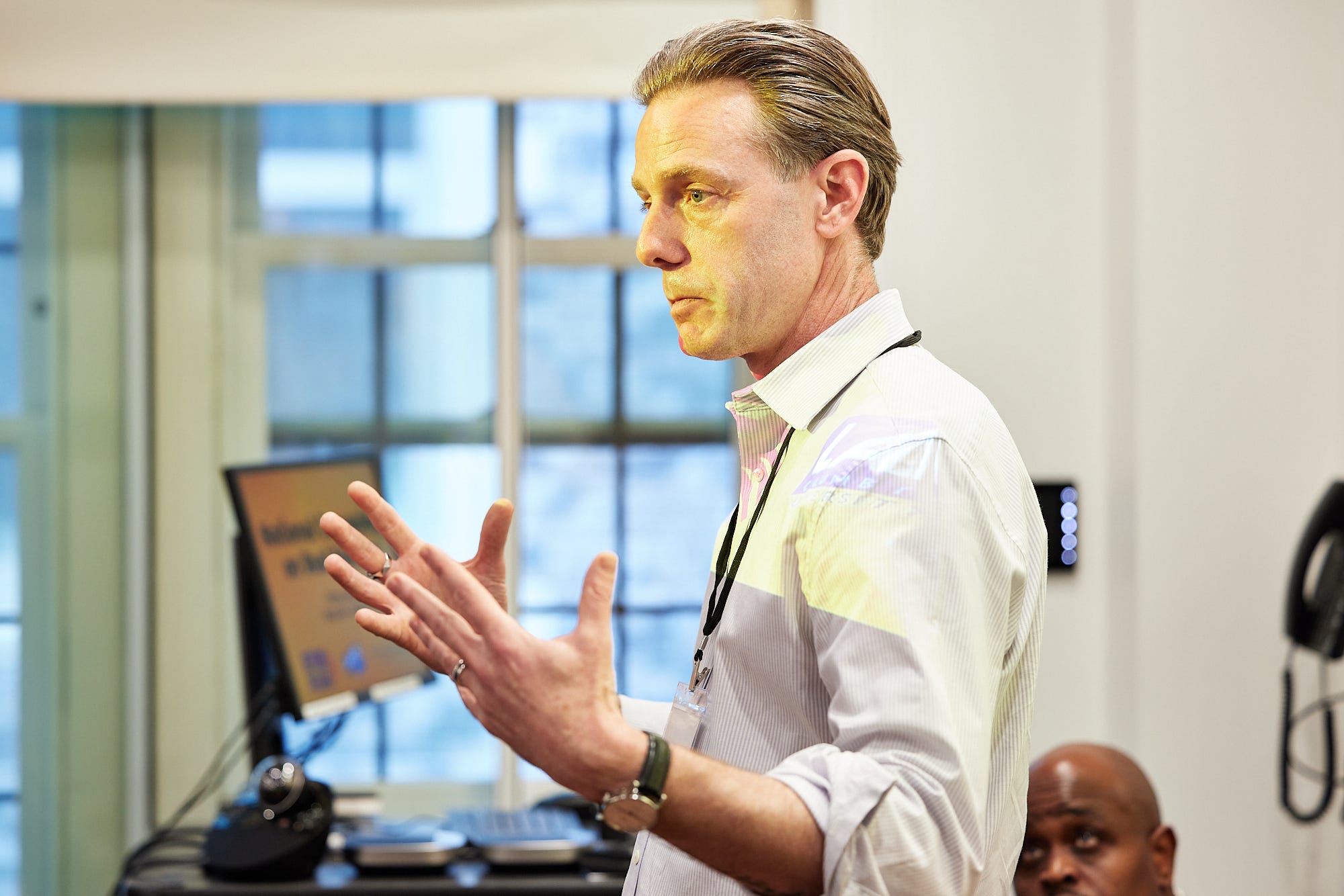
Facilitator: Jasson Perez (Just Impact Advisors) | Panelists: Bridgette Simpson (Barred Business), Sam Williamson (32BJ SEIU), Tamir Rosenblum (Mason Tenders District Council), Infinite George (GNY LECET)
The charge: Contract language is the smallest pen stroke with the largest reach. Unions can protect workers with records in their CBAs now.
Improving labor standards for workers with records is, as the panel framed it, a civil rights correction. The carceral system is built to teach people that they cannot turn to each other for survival or solidarity. Unions teach the opposite.
The first move is contract language. Beyond the Bars developed a template Collective Bargaining Agreement toolkit designed to give union negotiating committees ready-made language that protects workers with records. The model pulls from existing practices within some of the largest and most powerful unions in the country: Sam Williamson discussed 32BJ SEIU’s contract language that protects immigrant workers with active Department of Homeland Security cases from employer discrimination, and the same structural approach can be adapted for workers still under court supervision.
The principle, as one panelist put it: is to create the most rights with the fewest pen strokes.
The second move is shaping hiring practice itself. Workers in contract positions routinely lose jobs because employers run background checks, surface convictions from years or even decades ago, and use them to disqualify hires. Barred Business passed the first municipal ordinance in the country designating people with conviction records as a protected class. Unions can do the same inside the contracts of every employer they bargain with.
The third move is leveraging tools that already exist. Section 3 of the Housing and Urban Development Act of 1968 (12 U.S.C. 1701u), administered by HUD, creates hiring obligations for publicly funded construction projects, which is an opening for workers with records that requires no new legislation, just unions willing to use it. Project Labor Agreements (PLAs), the pre-hire agreements between unions and contractors on public works, include equal opportunity plans requiring membership from underrepresented demographic groups. Workers with records belong in those provisions explicitly.
When unions adopt this kind of language, something shifts. A new class of people enters the fight to defend it. The decarceral movement gains a labor base with infrastructure to train organizers at scale, while the labor movement gains organizers it never had before.
Panel 6: Organizing in Industries That Rely on Workers with Records
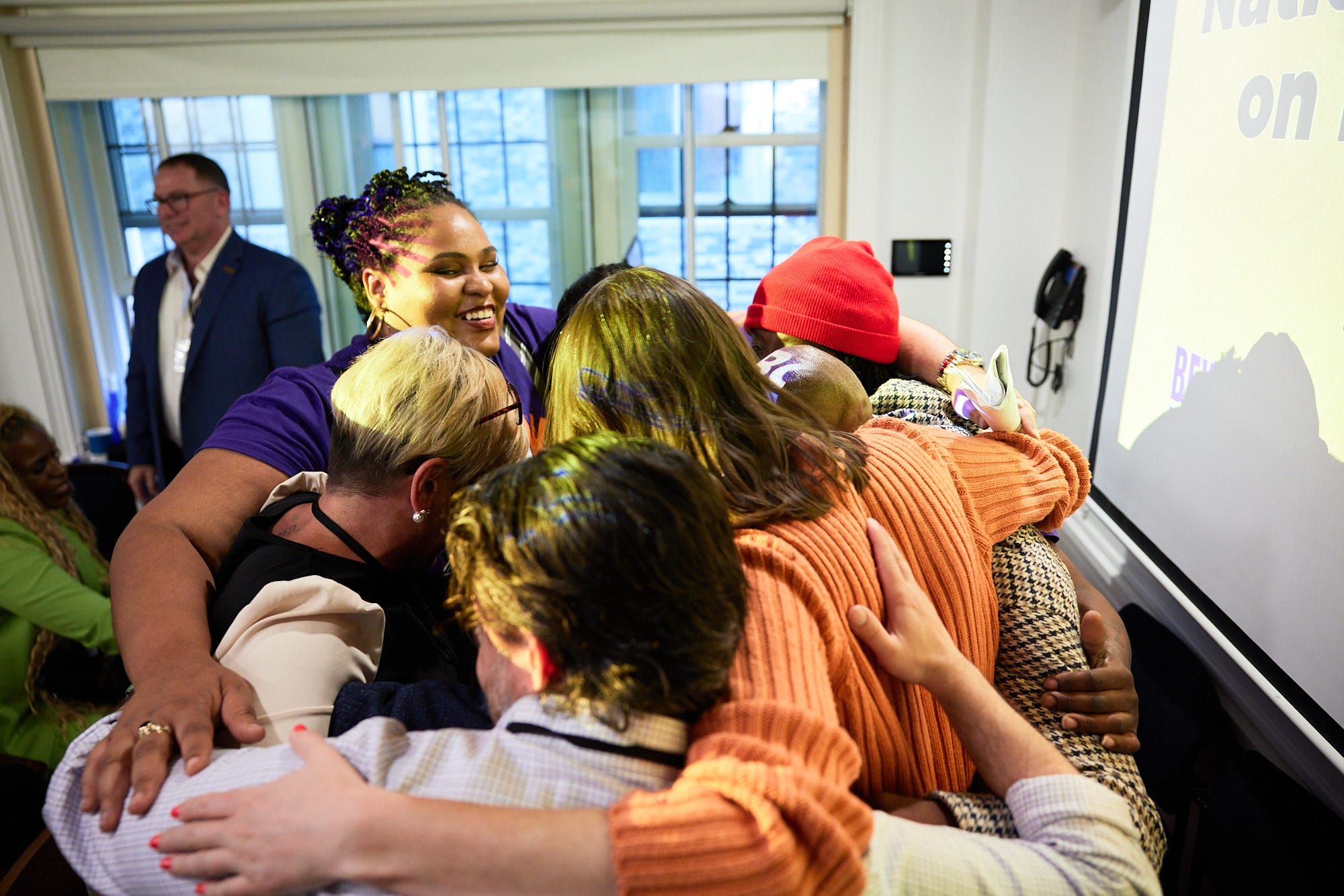
Facilitator: Katherine “Kat” Passley (Beyond the Bars) | Panelists: Will Tucker (Jobs to Move America), Larry Hodge (Jobs to Move America), Shannon Franks (New Flyer of America / IUE-CWA), Laurel Ashton (USSW), William Suarez (Beyond the Bars), McKenzie Joseph (Beyond the Bars)
The charge: Organize the whole worker. Ground every campaign in strategic research, identify clear leverage, and build creative strategies that convert community pressure into real organizing rights, stronger protections, and durable union power.
The final panel repeatedly returned to one principle: Whole Worker Organizing, or the practice of building relationships of care with workers, engaging workers’ lives beyond the worksite, and treating them as people whose work is one part of a larger life rather than as labor units who happen to belong to a workplace.
Three worker organizers modeled what Whole Worker Organizing produces. Billy Pearson, McKenzie Joseph, and Shannon Franks shared their experiences moving from incarceration through employment into organizing and pulling their coworkers into the fight along the way. None of those trajectories would have been possible if the unions and organizations they joined had treated them as transactional (or “paper”) members. Whole Worker Organizing is what makes the difference between a worker who attends a meeting and a worker who organizes one.
Panelists also discussed their organizing models. Will Tucker and Larry Hodge of Jobs to Move America (JMA), for example, presented JMA’s CBA² model: Community Benefits Agreements (CBAs) followed by Collective Bargaining Agreements. The sequencing matters. Community Benefits Agreements negotiate commitments from employers about how they will treat their workforce and the surrounding community, including hiring practices, wage standards, environmental protections, and neutrality clauses that let unions organize without retaliation.
JMA won CBA language at New Flyer that includes ban-the-box and inclusive hiring provisions, and is now pushing for similar commitments at Hyundai. The CBA becomes the foundation the eventual Collective Bargaining Agreement is built on. The “Good Neighbors” corporate campaign applies the same logic upstream, highlighting the gap between employers’ public-facing role in the community and how they actually treat workers, building leverage for stronger contracts before a workplace organizing drive even matures.
Communities shape workplaces, and workplaces shape communities. Whole Worker Organizing acknowledges that relationship. These organizations’ organizing models operationalize it, and their campaigns leverage it.
Together, they form the playbook for organizing in industries where workers with records are the spine of the labor force, and where workers with records—when organized—become the next generation of labor leaders themselves.
Panel 7: Closing Plenary—Institutional Commitments
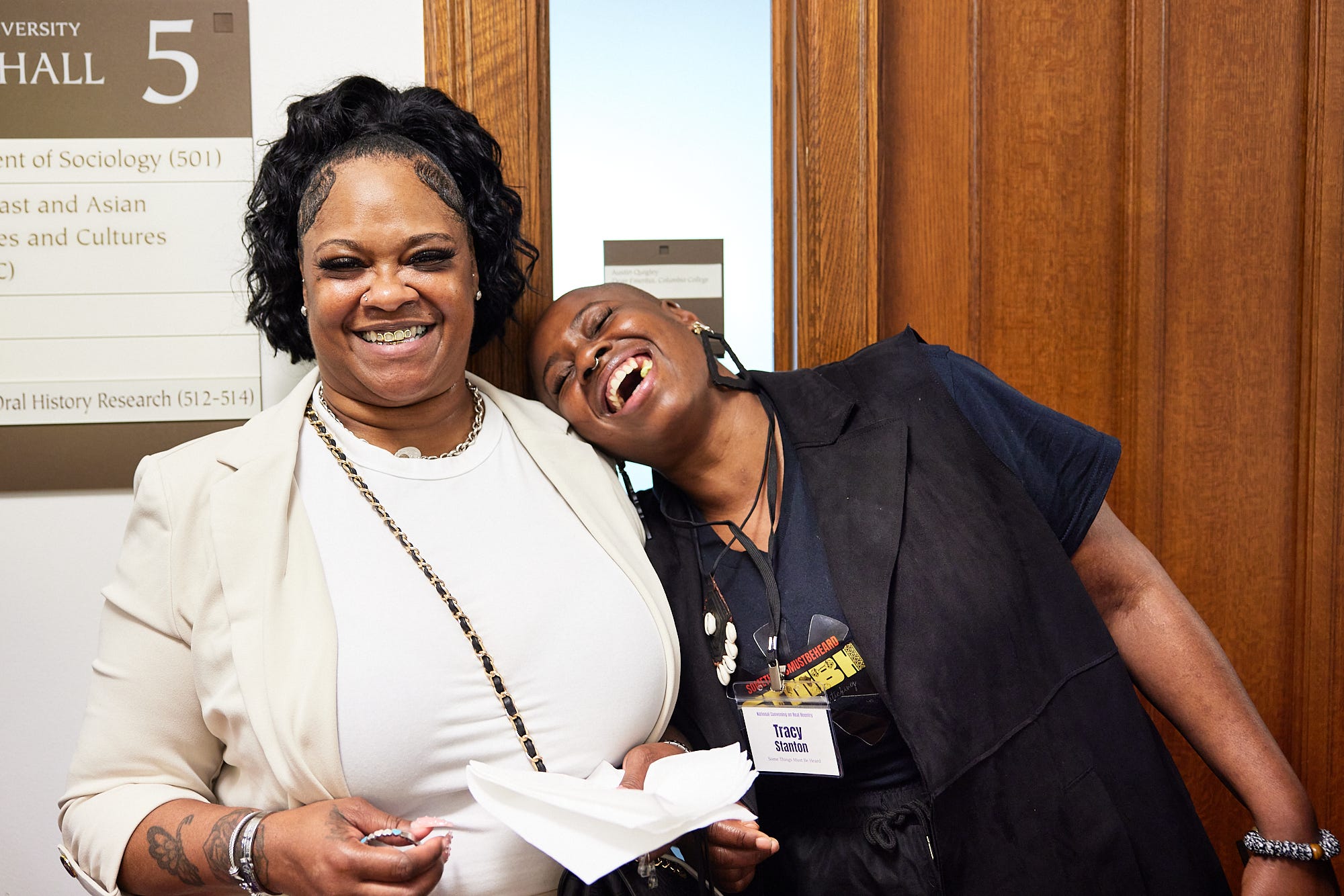
Facilitator: Jasson Perez (Just Impact Advisors) | Panelists: Katherine “Kat” Passley (Beyond the Bars), Bernard Callegari (LIUNA)
The charge: Learn how to organize people living under the carceral foot. As criminalization expands, that knowledge becomes essential for all of us.
The work described throughout this convening does not happen in a vacuum. Throughout our history, policing, incarceration, and state violence have been used to suppress our movements, discipline labor, and protect concentrated power, deployed against every struggle for justice this country has produced.
Organizing criminalized workers has always been urgent. Today it is also defensive. The carceral state is expanding and being turned against dissent itself. The organizations in the room have spent decades building the relationships, institutions, and muscle memory for organizing under these conditions. Expanding that work at scale is essential if our movements are to survive what’s coming.
Organizing requires art. It’s how we turn survival into analysis and isolation into collective identity. In honor of National Poetry Month, we close with Kat the Poet’s “Hunger Games.”
Hunger Games

[J]ustice has always
looked like us—
when we stand
too close together
to be counted.
* * *
We are the ones
who make fire
from eviction notices.
Who turn commissary crumbs
into communion.
* * *
So if you hear singing—
low, steady, unafraid—
that is not surrender.
That is hunger
turning into strategy.
Hunger turning into strategy. That is what this work asks of all of us. Here are actions you can take in celebration of May Day to take your first step.
Coming Up
People’s Hearing (Wednesday, April 29 | 9am)
A public testimony space where workers and community members share lived experiences of labor exploitation and system harm. Food and child care provided. Transportation reimbursements up to $50 available. Register here and write “Revival” in the notes.
Organizing Revival Bootcamp (Thursday, April 30 | 9am)
A skill-building training to strengthen organizing capacity, campaign strategy, and member leadership development. All trainings are available in English, Haitian Creole and Spanish. Food and child care provided. Transportation reimbursements up to $50 available. Register here and write “Revival” in the notes.
May Day Screening/Action (Friday, May 1 | 10:30am/1:30pm)
Day begins at 10:30am with a screening of “Without Shade, Without Rest” at Coral Gables Art Cinema followed by a short panel. Then the March for Planting Justice at 1:30pm—a mass mobilization led by WeCount! demanding dignity, labor protections, and fair wages for plant nursery workers. Register here and write “Revival” in the notes.
Organizer in Training Graduation (Saturday, May 9 | 6pm)
Join us at our offices as we celebrate the graduation of fellows Cece Pinder, McKenzie Joseph and Ronald Clayton from Beyond the Bars Organizer in Training (OIT) program! Contact your organizer to join.
As new leaders step forward, we’re grounding that momentum in the ideas, history, and strategies shaping the work ahead.
What We’re Reading
Kim Kelly, Fight Like Hell: The Untold History of American Labor (2022)
A people’s history of the labor movement that centers the workers most often written out: women, Black workers, immigrants, incarcerated workers, and others on the margins of formal unions. Kelly shows that the labor movement has always been at its strongest when it organizes those pushed furthest out—and that today’s fights are part of a much longer lineage of resistance.
John Fabian Witt, The Radical Fund: How a Band of Visionaries and a Million Dollars Upended America (2026)
Witt tells the story of the Garland Fund, an early 20th-century experiment in “radical philanthropy” that invested in movements for free speech, racial equality, and working-class power. At a time of extreme inequality and repression, the Fund backed ideas that were once fringe but later became mass movements. It’s a lesson on how movement funding can shape whether those ideas remain marginal or remake society.
Take Action
If our work resonates with you, the most important thing you can do is fuel it.
You can also learn more at beyondthebars.org, stay updated at @beyondbars_mia on IG and X, or sign up to volunteer.